Surf Lesson Safety Tips: Surfing in Sri Lanka
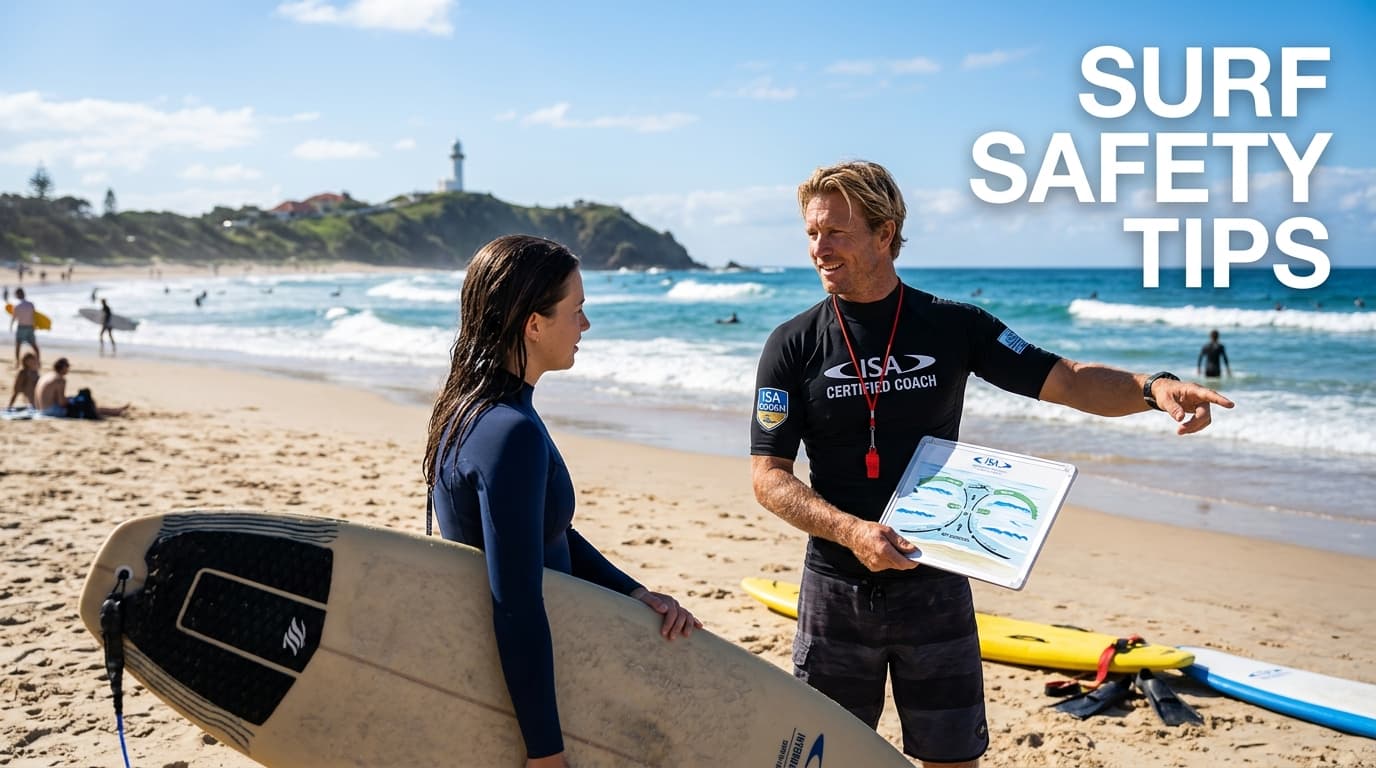
Surfing is technically classified as an extreme sport. You are dealing with heavy equipment, moving currents, and the unpredictable power of the ocean. However, with the proper instruction and a basic understanding of ocean safety, it is incredibly safe and overwhelmingly fun.
At Edgeway Surf, our ISA-certified coaches prioritize student safety above absolutely everything else. Before we even let you touch the water in Arugam Bay, we ensure you understand how to protect yourself and others.
If you are planning your Sri Lankan surf trip, here are the essential surf safety tips and ocean etiquette rules you need to know.
1. Always Protect Your Head When Falling
The most common injury in beginner surfing isn't from the reef or sea creatures—it is from hitting your own surfboard.
When you fall off your board (which you will do constantly!), your board can bounce back toward you on the whitewash. The Golden Rule: Whenever you wipe out, always bring your arms up to cover your head and face before you surface. Never emerge from the water blindly.
2. Understand How to Handle Your Board
A large 8-foot beginner foam board is like a sail. If a wave hits it while it is turned sideways, it will act like a wrecking ball.
- Always keep the nose of the board pointing directly out to sea (into the oncoming waves) when you are standing in the water.
- Keep the surfboard beside you, never directly between your body and an incoming wave, or the wave will smash the board into your chest.
3. Don't Fight the Rip Current
Rip currents are natural channels of water that flow quickly away from the shore. They are the ocean's way of funneling water back out to sea.
If you get caught in a rip current, you will feel yourself being pulled away from the beach. The Rule: Do NOT panic, and do NOT paddle directly against the current toward the shore (you will exhaust yourself). Instead, paddle parallel to the beach until you are out of the narrow rip channel, and then let the incoming waves push you back to the sand.
4. Respect the Surf Etiquette (The "Drop-In" Rule)
Surfing has a strict set of unwritten traffic rules to prevent collisions. The most important rule is understanding the "Right of Way."
The surfer who is closest to the breaking peak of the wave has the ultimate right of way. If you see someone already up and riding a wave, do not paddle for that same wave and jump in front of them. This is called "dropping in," and it is highly dangerous and frowned upon by locals.
(Don't worry, during your first surf lessons, your instructor acts as your traffic controller and will make sure nobody is in your way).
5. Beware of the Sri Lankan Sun
The tropical sun in Arugam Bay is absolutely brutal, especially because the water reflects the UV rays directly onto your skin.
- Do not surf in a standard bikini or boardshorts on day one without sunscreen.
- Always wear a high-quality, UV-protective Rash Guard (we provide these for free during all our Surf Lessons).
- Use heavy-duty, reef-safe Zinc on your face, nose, and cheeks. Standard lotion sunscreens wash off in the saltwater within 15 minutes.
6. Know Your Limits (Avoid the Reef)
As a beginner, you belong on sandy-bottom waves. Arugam Bay is famous for Main Point, a fast wave that breaks over a sharp, shallow coral reef. Leave the reef breaks to the advanced surfers.
We take all our beginners to safe, sandy-bottom spots like Peanut Farm and Whiskey Point, where falling is completely harmless.
Learn with the Professionals
The absolute safest way to surf in Arugam Bay is under the supervision of a trained local guide. Our instructors at Edgeway Surf have CPR training, ISA certifications, and decades of local ocean knowledge. We know exactly which spots are safe on any given tide.
Check out our Surf Camp Packages to guarantee a safe, stress-free learning environment!